
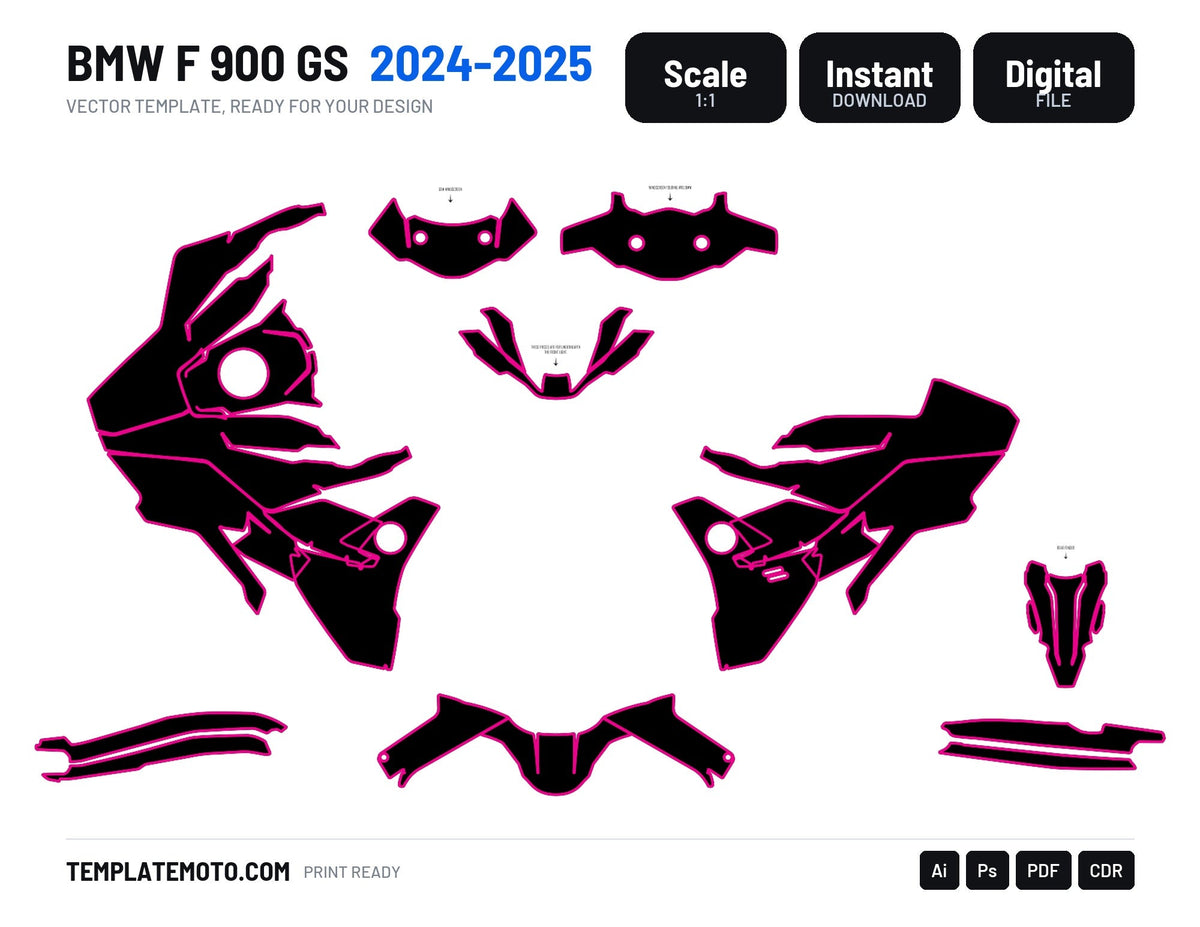
If you have ever printed a graphics kit that looked perfect on screen and then refused to sit on the bike, the problem was almost never the printer. It was the template. Here is what a real 1:1 motorcycle graphics template contains, and how to tell a good one from a drawing that will waste your vinyl.
True scale means you can measure it
A 1:1 template is drawn at the real size of the parts. Open the file, measure the fuel tank side panel with the ruler tool, and you get the same millimetres you would get with a tape measure on the bike. Nothing is scaled, nothing is "close enough". That single property is what lets you design once and print without a test fit.
It matters because vinyl does not forgive. A shroud drawn five millimetres short leaves a bare edge along the radiator. A seat panel drawn five millimetres long creases when you wrap it. On a full kit, those small errors add up to a kit that looks homemade.
Every part is a separate closed path
A template is not a picture of a motorcycle. It is a set of outlines, one per plastic part, each one closed so that it can be filled, clipped and cut. When each piece is a closed path you can:
- drop your artwork on top and clip it to the shape in one click
- add bleed by offsetting the path, instead of guessing
- export a clean cut contour for the plotter
- move a single panel without breaking the rest of the kit
Open paths, stray anchor points and shapes made of hundreds of tiny segments are the signs of a template traced from a photo. They look fine until you try to offset them for bleed and the outline falls apart.
The holes and the overlaps are part of the job
A good template carries the details that cost you time when they are missing: the bolt holes, the fuel cap cutout, the number plate windows, the areas where two panels overlap. Those are the places where a kit either lines up or does not. When the template shows them, you can decide where your design breaks and where it continues across two parts.
How to check a template in two minutes
- Measure one known part. A 450 enduro front number plate is around 250 mm wide. If the file says 180, the scale is wrong.
- Select a panel and look at the path count. One part should be one or a few paths, not forty.
- Offset a path by 3 mm. If the outline stays clean, the drawing is clean.
- Look for the cut lines. On our files they are drawn in pink so you can see them on screen and switch them off before printing.
Where this leaves you
A template is a tool, not a decoration. It should let you go from an idea to a printed kit without redrawing anything. That is why every file we sell is drawn at true size, part by part, and tested on a real machine before it goes online.
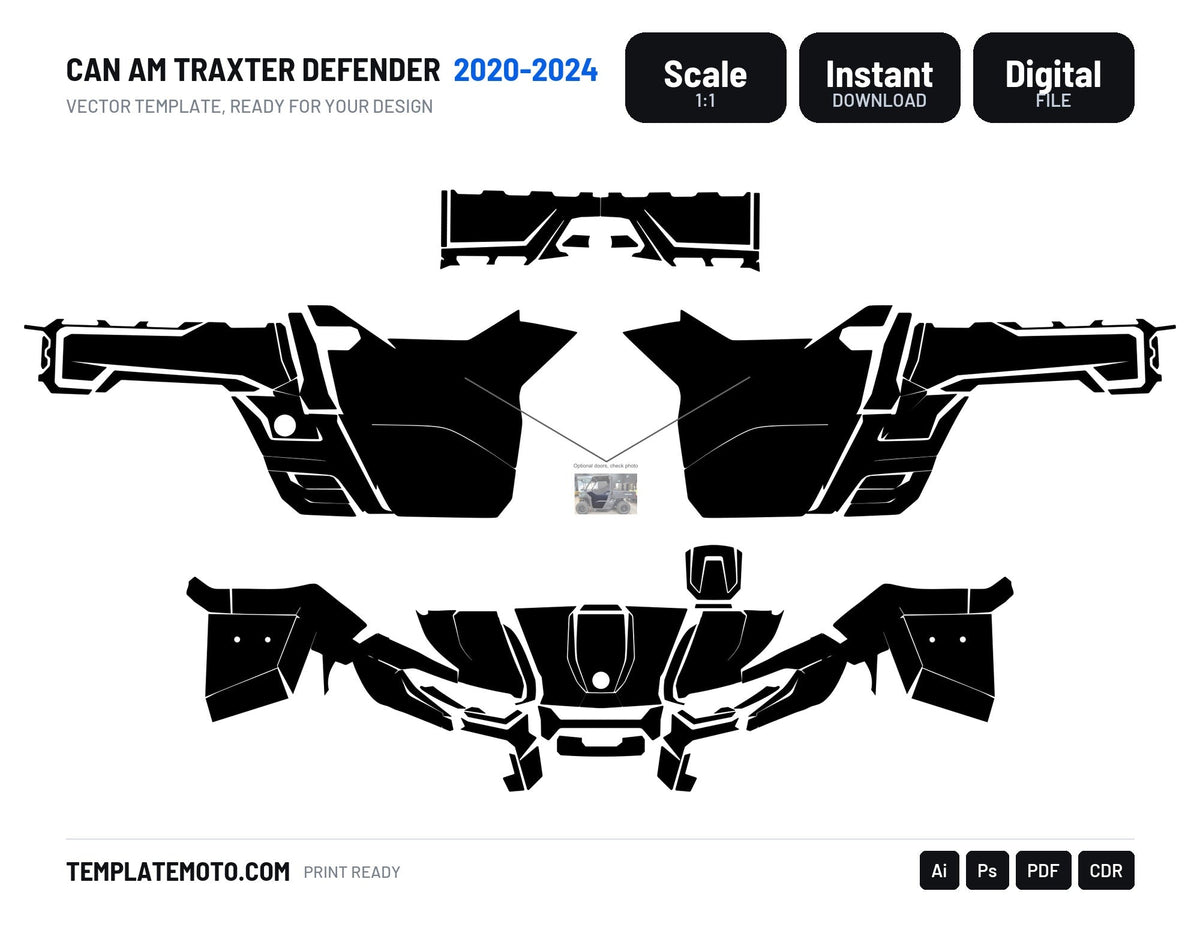
Browse what fits your workshop: motocross and enduro templates, street and adventure templates, UTV templates or ATV and quad templates. Two examples of what a complete file looks like: the BMW F 900 GS 2024-2025 and the Can-Am Traxter Defender 2020-2024.

Leave a comment
This site is protected by hCaptcha and the hCaptcha Privacy Policy and Terms of Service apply.